
The Real Product in Battery Storage Isn't the Battery — It's Knowing Its State of Health
State of charge tells you how full a battery is right now. It tells you almost nothing about how much life is actually left in it. Most battery networks are built around the first number because it's easy to measure. The number that actually determines whether the network keeps working is the second one, and it's the one almost nobody is tracking properly.

Every lithium battery degrades with use, but not on a fixed schedule and not uniformly across a fleet. Two battery packs that entered a network on the same day, charged from the same source, can have meaningfully different remaining capacity a year later depending on how deeply they were discharged each cycle, what temperatures they operated in, how long they sat at full or empty charge between uses, and how fast they were charged. State of health — the ratio of a battery's current maximum capacity to its original capacity — is what actually captures this, and it can't be read off a simple charge percentage. It has to be modeled from usage history, and that model gets better the more data it has to work with.
For a network with a handful of batteries, this doesn't matter much — you can eyeball degradation and replace units when they start underperforming. For a network with thousands of batteries cycling through swap stations, home backup units, and stationary equipment, ignoring state of health isn't a minor inefficiency, it's an operations risk. A battery approaching the end of its usable life looks identical to a healthy one on a simple charge-level readout right up until it fails to hold a charge through a full day, strands a swap station short of capacity, or degrades fast enough that a user starts getting meaningfully less range or backup time than they were sold. By the time that shows up as a customer complaint, the network has already been running blind for months.
This is why Svabag Labs treats battery telemetry as a first-class product layer, not a maintenance afterthought bolted on after the hardware and network are built. Every battery pack in the system reports usage data continuously — charge and discharge cycles, depth of discharge per cycle, temperature exposure, time spent at extreme states of charge — and that data feeds a degradation model that estimates real remaining capacity and projected remaining lifespan for every individual unit, not just a fleet-wide average. A fleet average tells you the network is healthy in aggregate. It tells you nothing about which specific battery is about to become a problem next week.
The practical payoff shows up in routing, not just maintenance scheduling. A swap network that knows individual battery health can route a degrading unit toward lower-demand use cases — a short-range local trip instead of a long delivery route — while it's still perfectly usable, rather than letting it fail unpredictably in a high-stakes moment for whoever happens to swap it in. It can flag units for proactive replacement before they fail rather than after, which matters enormously for a network where a stranded user isn't a minor inconvenience, it's someone's income-generating vehicle sitting dead on the side of the road. And it can feed back into the circular battery economy directly — a unit past its useful life for high-demand mobility use can still have meaningful capacity left for lower-intensity stationary applications, extending its useful life instead of retiring it outright.
There's a longer-term asset value argument here too. A network that can produce a verified, cycle-by-cycle health history for every battery it operates has something a network relying on spot-checks and warranty claims doesn't: real data on how its specific batteries degrade under its specific usage patterns, in its specific operating conditions. That data compounds — it improves future battery sourcing decisions, sharpens replacement timing, and eventually becomes a genuine asset in its own right when it comes to financing or insuring a battery fleet, because the risk is measured rather than estimated.
The batteries themselves are increasingly a commodity — cell chemistry and manufacturing have converged enough that the hardware differentiation between operators is shrinking. What doesn't commoditize as easily is knowing, at any given moment, the true remaining health of every unit in a live network, and using that to route, maintain, and replace intelligently instead of reactively. That's the layer that actually determines whether a battery-dependent network stays reliable at scale — and it's a software and data problem long before it's a battery chemistry one.
More from Svabag Labs
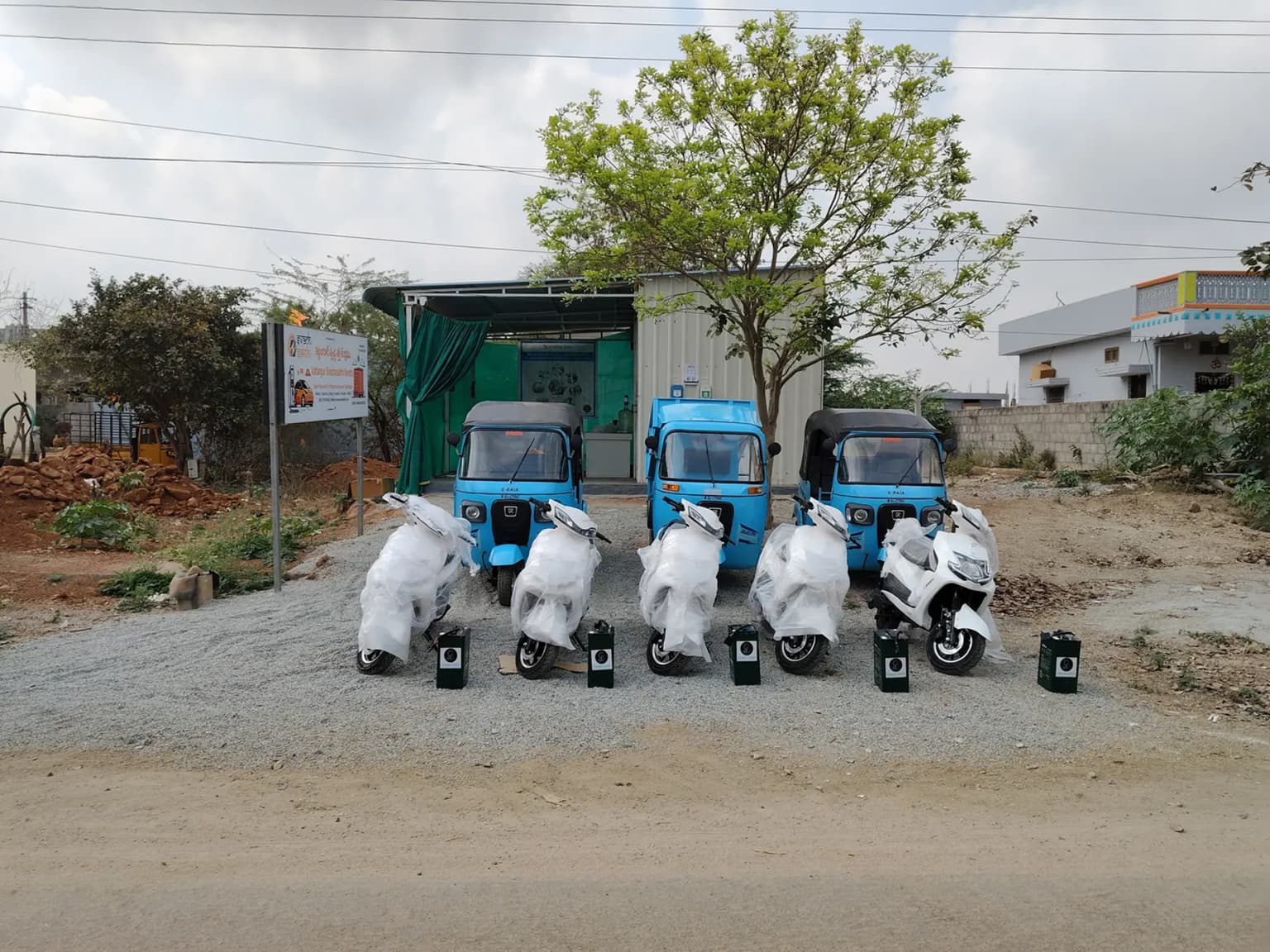 EV Infrastructure
The Circular Battery Economy: Rethinking EV Infrastructure for Emerging Markets
Why EV adoption in emerging markets depends less on more chargers and more on treating batteries as a shared, tracked, and reused infrastructure asset.
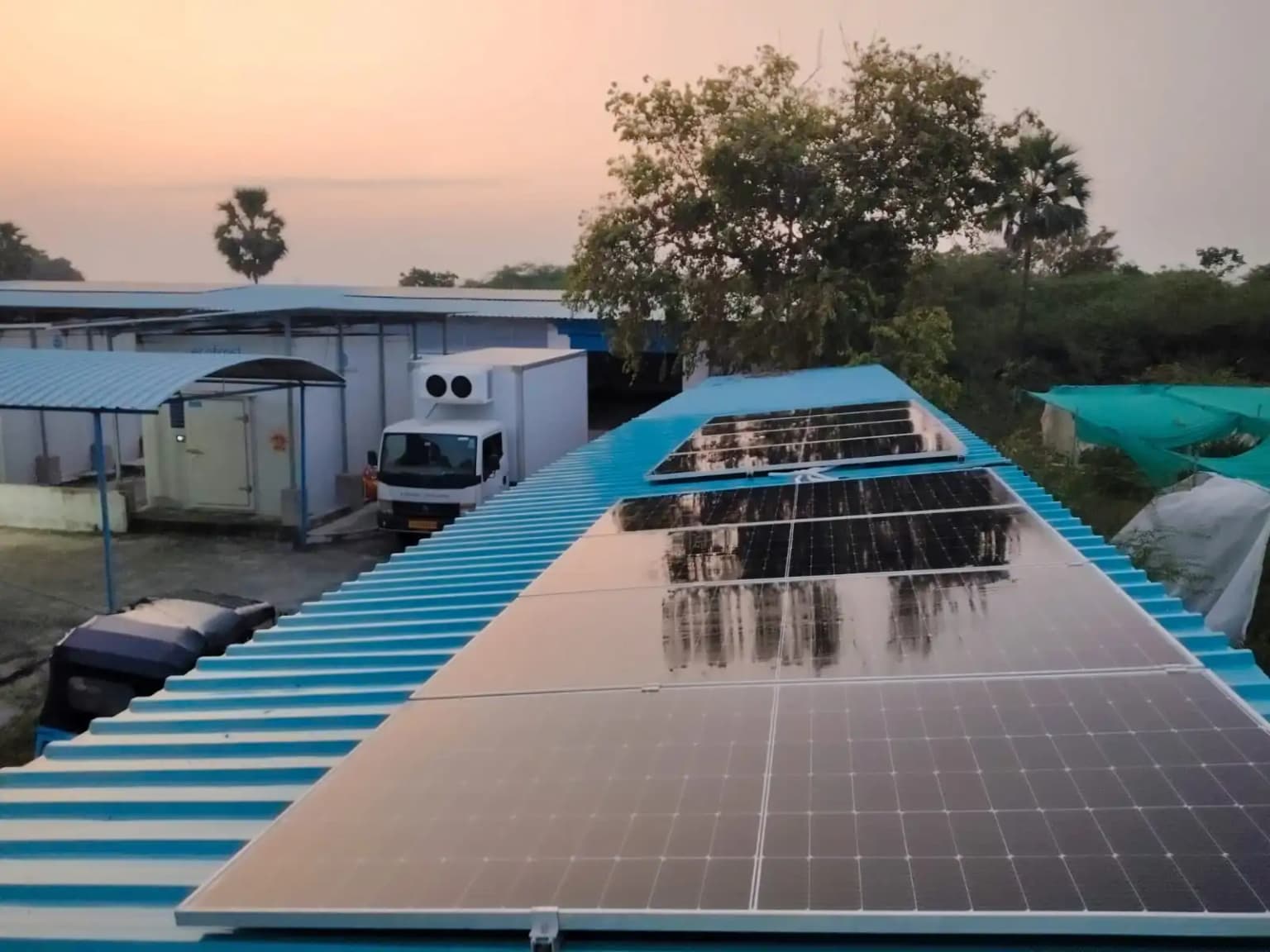 Renewable Energy
Why Decentralized Renewable Energy Is the Infrastructure India Needs Next
India's renewable energy growth has been a generation story. The next phase has to be a distribution story — and that changes what infrastructure gets built.