
Why Decentralized Renewable Energy Is the Infrastructure India Needs Next
India's renewable energy story over the last decade has mostly been a generation story — gigawatts of installed solar and wind capacity, falling costs, ambitious national targets. The next decade has to be a distribution story, and that requires fundamentally different infrastructure than the one built to hit generation targets.
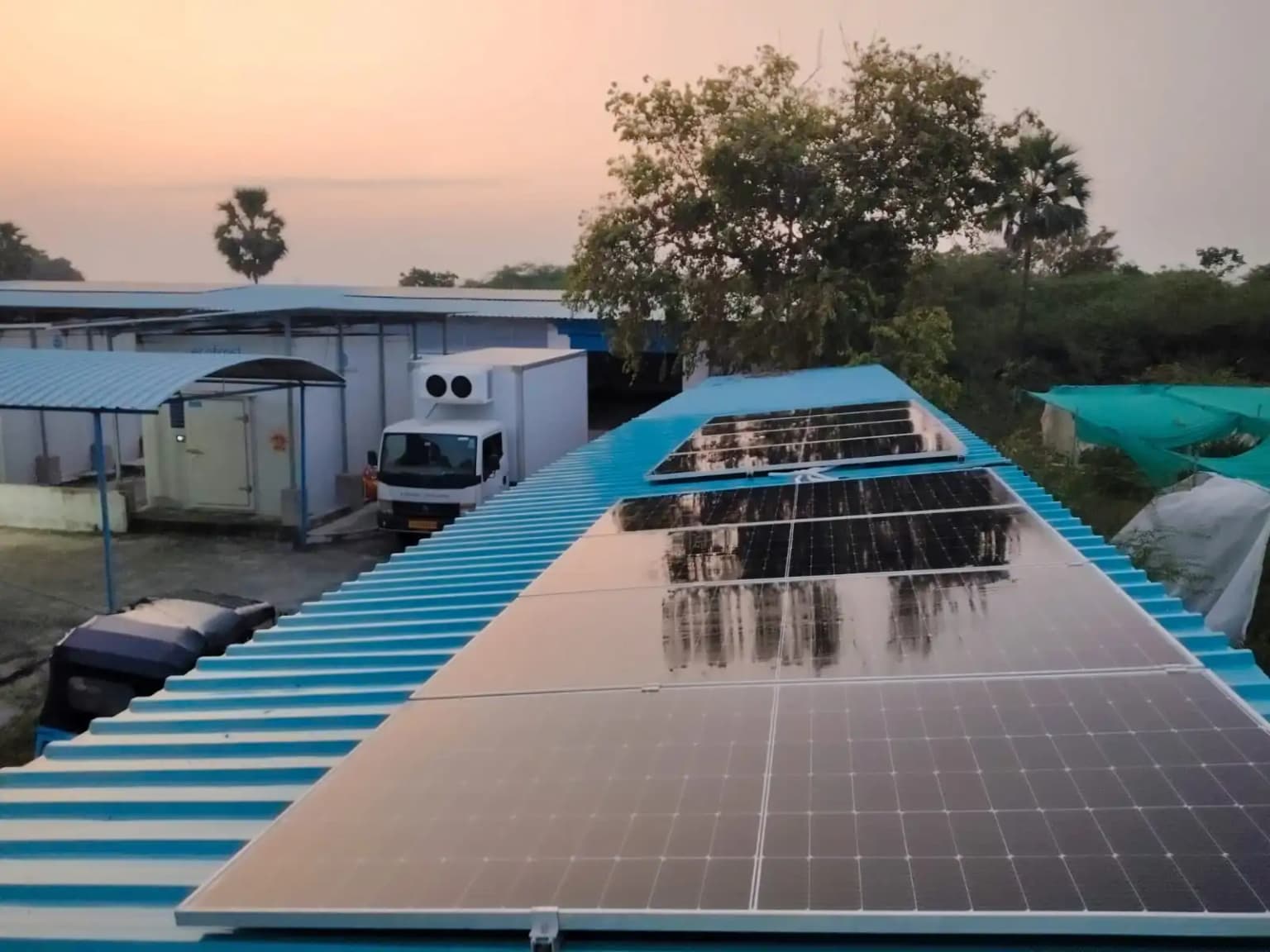
Generation capacity and energy access are not the same metric, and the gap between them is where a large share of India's underserved demand actually sits. Large-scale solar and wind installations feed a centralized grid that was engineered for a different distribution pattern — dense urban and industrial load centers connected by long transmission corridors. That architecture is efficient for what it was built to do, but it leaves a structural gap for the demand that sits furthest from those load centers: rural households, small enterprises, and semi-urban clusters where grid connections are thinner, transmission losses are higher, and outage recovery takes longer. Adding more centralized generation capacity doesn't close that gap on its own — it just adds more power to a distribution system that was never optimized to reach the edges efficiently.
Decentralized energy infrastructure closes that gap by moving generation and storage physically closer to the point of use, rather than relying on transmission distance to bridge it. Rooftop and community-scale solar, paired with distributed battery storage and local distribution points, creates a parallel layer of energy infrastructure that doesn't compete with the centralized grid so much as extend its reach into the places it structurally underserves. This isn't a rejection of utility-scale renewable buildout — both layers are necessary — but treating decentralized infrastructure as a secondary or transitional solution rather than a core investment category is a mistake the sector is still making.
The technology case for decentralization has existed for a while. What's changed is the software layer that makes it operationally viable at scale. A distributed network of solar installations and battery packs is only as useful as the system's ability to track state of charge, route capacity to where demand is highest, and manage battery health across thousands of individual units — the same real-time coordination problem that shows up in circular battery-swap networks for EV infrastructure. Svabag Labs treats this as shared infrastructure: the smart energy management layer built for battery-swap mobility networks is the same layer that makes decentralized generation and storage viable for household and community-scale energy access.
This connects generation, storage, and distribution into a single managed system rather than three disconnected markets. A rooftop solar installation generating surplus capacity, a battery network moving that stored energy to wherever it's needed most, and a local distribution point serving households, small enterprises, and EV users — these only work as a coherent system if there's a technology layer coordinating all three in real time. Build them as separate initiatives, and you get isolated pilots that don't scale. Build them as one integrated infrastructure stack, and the same battery serving a household at night can serve an EV swap point the next morning, multiplying the utilization of every unit of installed capacity.
There's an economic argument here as much as a technical one. Decentralized infrastructure changes who captures the value that clean energy generation creates. In a purely centralized model, a household or small business is a rate-payer with no upside from the broader renewable transition. In a decentralized model with local generation and storage, that same household can be a net contributor to the system — generating surplus power, participating in a local distribution network, and capturing a share of the value that surplus creates. That shift matters for adoption economics as much as it matters for equity: decentralized infrastructure isn't just a technical fix for access gaps, it's a different, more distributed model for who benefits from the clean energy transition.
India's net-zero targets will be met through utility-scale generation, and decentralized infrastructure won't replace that layer. But the households, small enterprises, and communities that centralized transmission has been slow to reach need infrastructure specifically designed to close that gap, not just more capacity added to a system that structurally can't reach them efficiently. That's the layer of the energy transition Svabag Labs is building — the distribution problem the last decade of generation-focused growth still leaves unsolved.
More from Svabag Labs
 EV Infrastructure
The Circular Battery Economy: Rethinking EV Infrastructure for Emerging Markets
Why EV adoption in emerging markets depends less on more chargers and more on treating batteries as a shared, tracked, and reused infrastructure asset.
 Battery Storage
The Real Product in Battery Storage Isn't the Battery — It's Knowing Its State of Health
Two batteries with the same charge level can have wildly different remaining lifespans. Most storage networks don't track the difference until it's already a failure.