
The Circular Battery Economy: Rethinking EV Infrastructure for Emerging Markets
Most conversations about EV infrastructure in emerging markets start with a chargers-per-kilometer problem. The more useful question is a batteries-per-user problem — and it points to a very different kind of infrastructure.
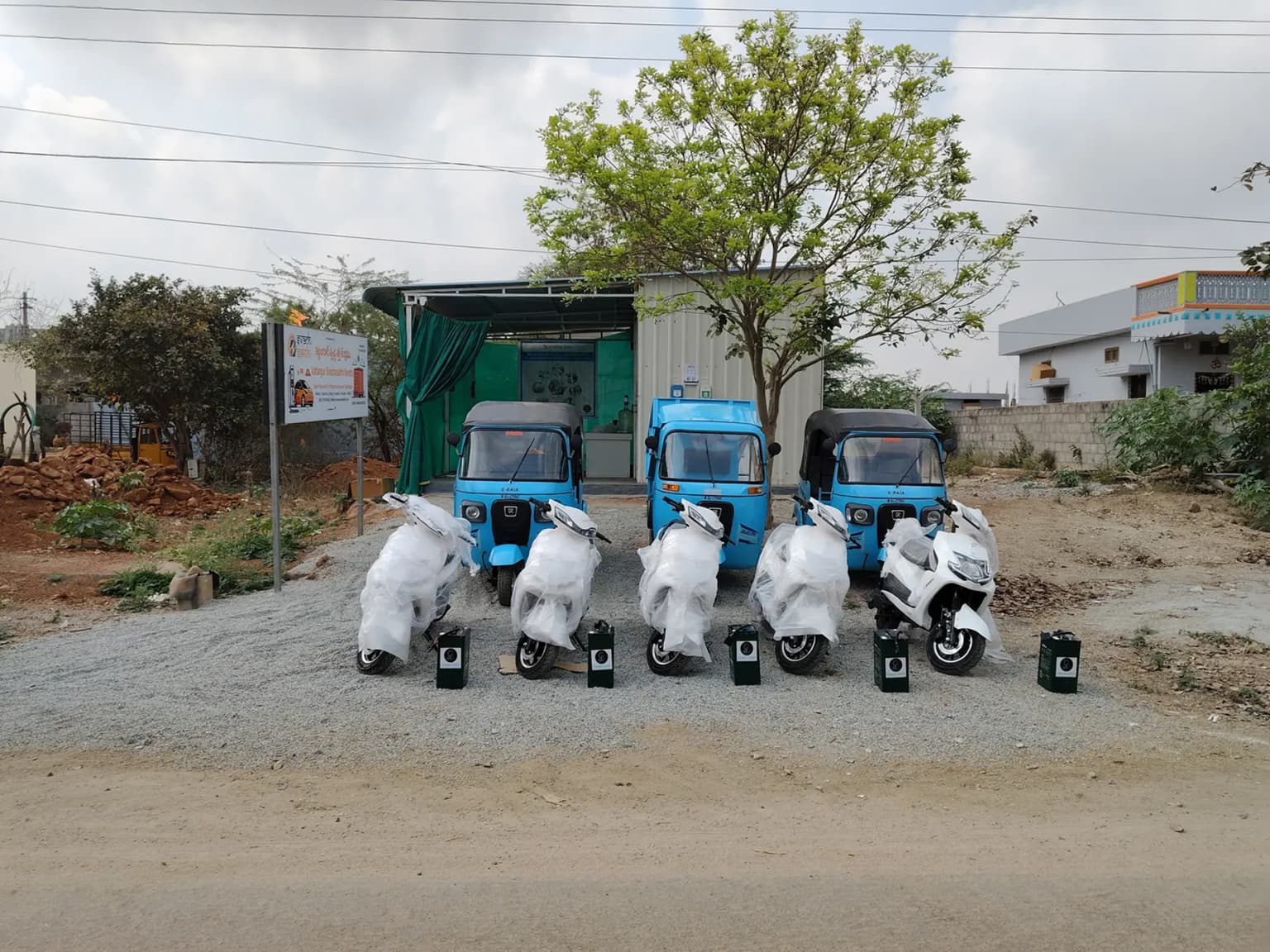
The default global playbook for electric mobility was written for markets with reliable grid density, dedicated parking, and owners who can leave a vehicle plugged in overnight. Most of emerging-market mobility looks nothing like that. Two- and three-wheelers dominate vehicle volumes, vehicles are frequently income-generating assets that can't sit idle for a multi-hour charge, and grid infrastructure in many operating areas is neither dense nor consistently reliable. Building out a fixed-charger network under these constraints doesn't just cost more per user served — it solves the wrong problem.
At Svabag Labs, we've approached this from the battery outward rather than the charger outward. A battery pack that can move between a home power backup unit, a two-wheeler, and a community distribution point isn't a compromise on any single use case — it's a fundamentally more efficient use of a capital-intensive asset. Instead of one battery sitting idle in one vehicle for most of its life, the same unit cycles through multiple points of use, getting charged wherever generation capacity is available and deployed wherever demand is highest at that moment.
This is the circular battery economy: batteries as a shared, tracked, continuously-reallocated resource rather than a fixed component bolted to a single vehicle. It requires three things working together. First, standardized, swappable battery packs that aren't locked to a single vehicle model or use case. Second, a distribution network — what we call swap points — dense enough that a two-minute swap is genuinely faster than any charging alternative. Third, and most critically, a software layer that tracks every battery's state of charge, health, and location in real time, so the system can route capacity intelligently instead of relying on guesswork.
That third piece is where most attempts at battery-swap infrastructure fall short. Physical swap stations are relatively easy to replicate; the hard problem is knowing, at any given moment, which battery to send where — factoring in state of health degradation, charge cycles already logged, distance to the nearest generation source, and current demand across a network of swap points. Get this wrong and a swap network is just a more expensive charging station. Get it right, and it becomes an asset-utilization engine that materially changes the unit economics of clean mobility.
The unit economics matter because they determine whether this scales past pilot projects. A vehicle owner running a delivery route or a ride service can't absorb hours of downtime for charging without losing income — for that user, a battery-swap network isn't a sustainability upgrade, it's the only version of EV ownership that's economically viable at all. That's a very different value proposition than the one driving EV adoption in mature markets, and it's why infrastructure built for those markets tends to underperform when transplanted into emerging ones.
There's a second-order effect worth naming: a circular battery network also extends battery lifespan and improves fleet-wide utilization of renewable generation capacity, because batteries are being charged and discharged in a managed, distributed pattern rather than a single fast-charge-to-full cycle repeated by every individual owner. That's better for the battery, better for the local grid or off-grid generation source feeding it, and better for the total cost of the system.
Building this kind of infrastructure isn't a single product decision — it's an integration challenge across hardware standardization, distributed software, and physical network design, solved simultaneously rather than sequentially. That's the layer of the clean-mobility stack Svabag Labs is building toward: not another charging network competing on coverage, but battery infrastructure designed around how vehicles are actually used, and how capital-intensive assets should actually be shared, in the markets that will define the next billion EV users.
More from Svabag Labs
 Battery Storage
The Real Product in Battery Storage Isn't the Battery — It's Knowing Its State of Health
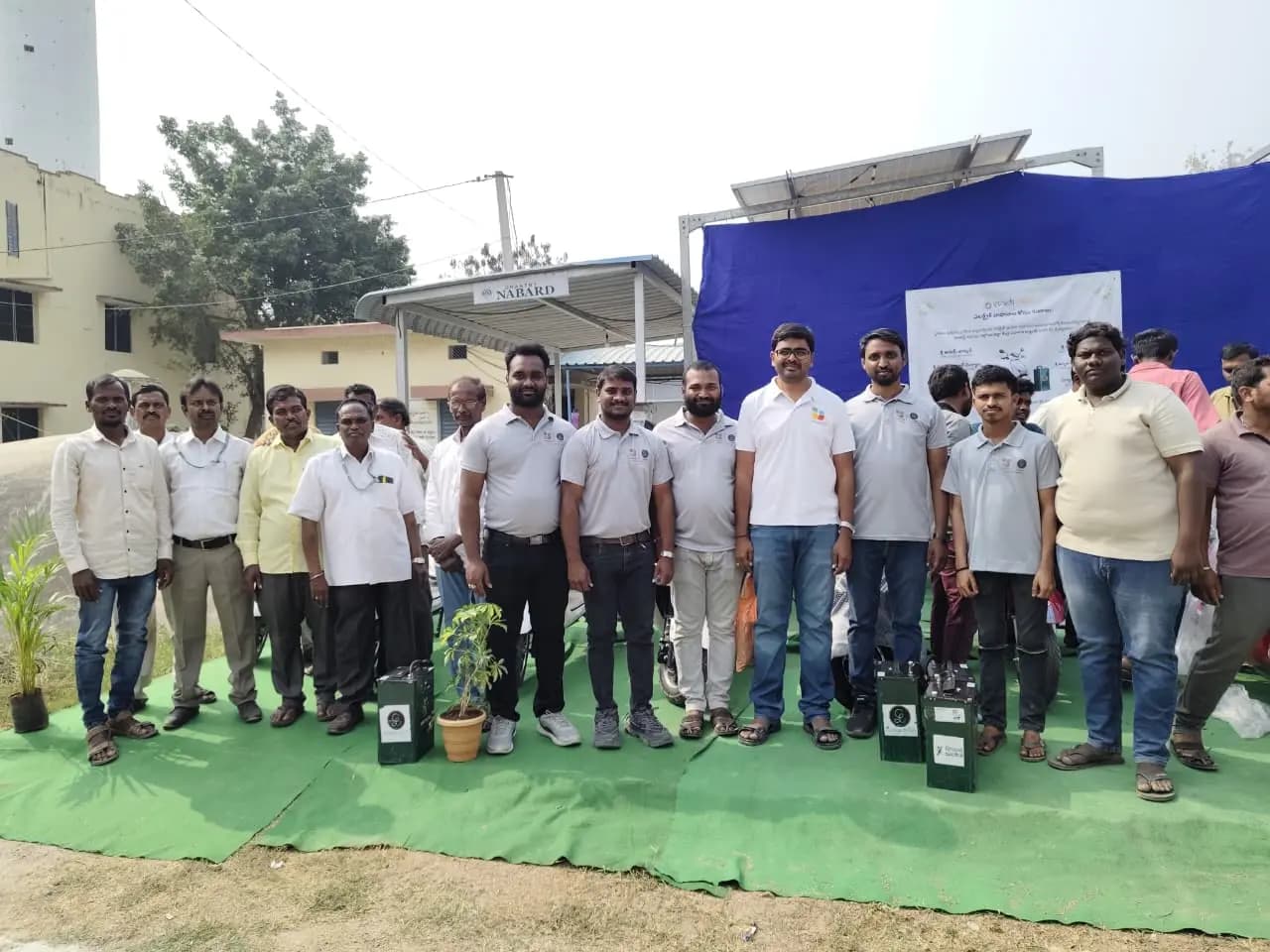
Two batteries with the same charge level can have wildly different remaining lifespans. Most storage networks don't track the difference until it's already a failure.
 Renewable Energy
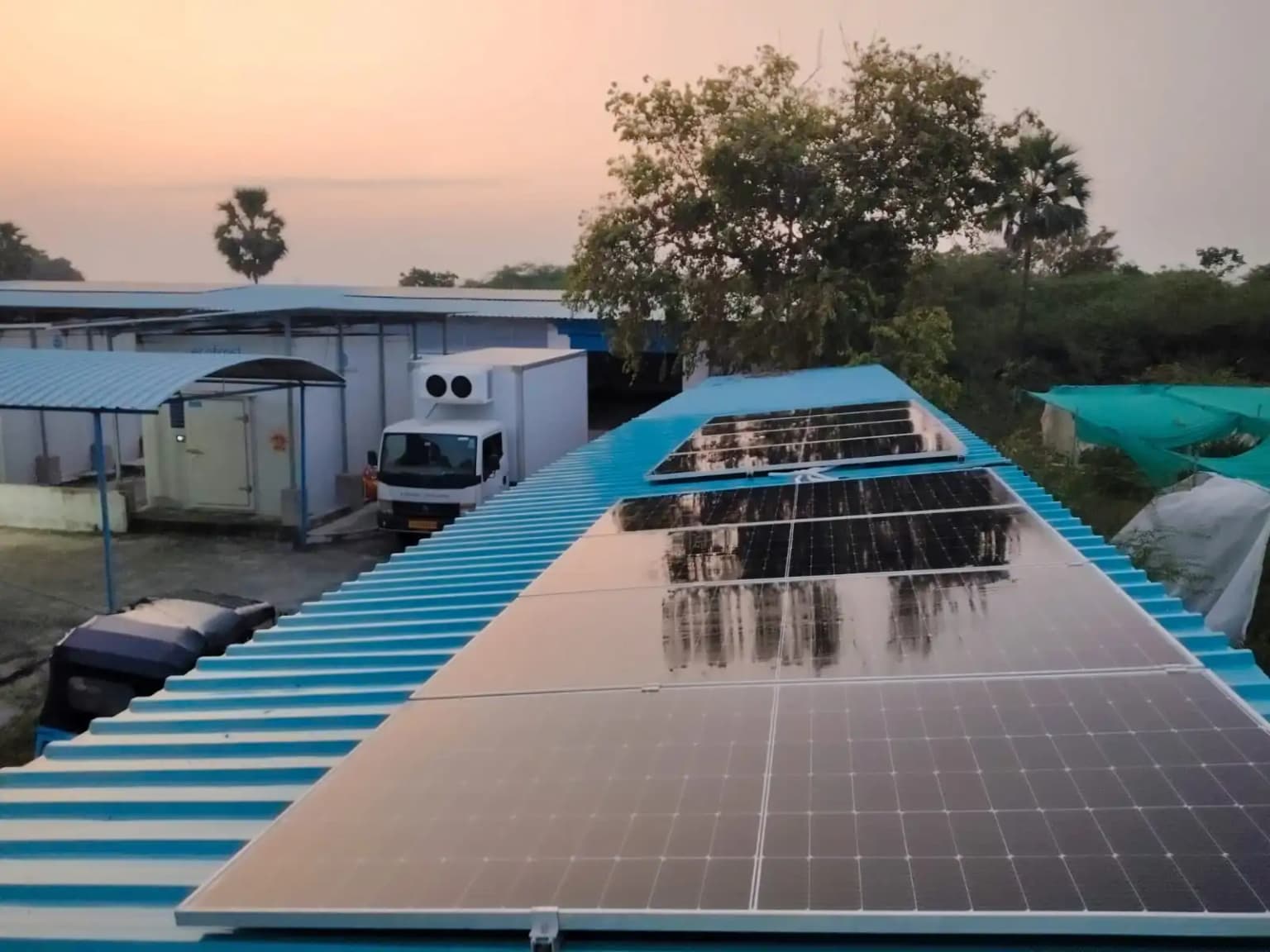
Why Decentralized Renewable Energy Is the Infrastructure India Needs Next
India's renewable energy growth has been a generation story. The next phase has to be a distribution story — and that changes what infrastructure gets built.